

How I Make Diary Comics
A step-by-step guide for getting started

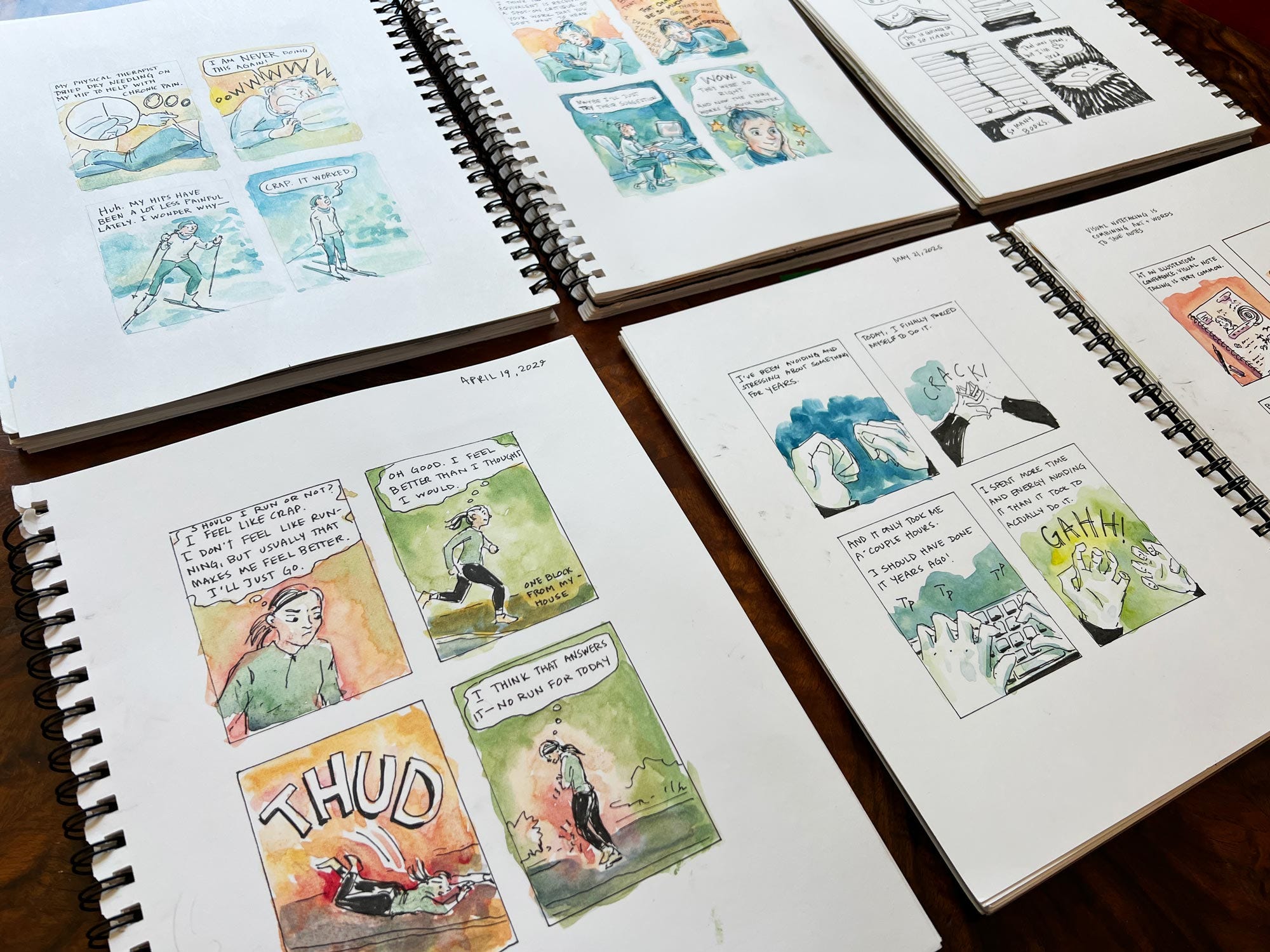
Since I started making diary comics a few years ago, they’ve done more for my drawing practice than almost anything else—helping me develop my style, feel more comfortable with my pen, and bring creative play into my everyday life.
There’s no right way to make diary comics so I encourage you to work in whatever way you enjoy, and in whatever way makes it more likely you’ll actually finish the comic. That said, some people find structure useful—so here’s the process I often follow, in case it helps you get started.
What to Draw About
Your diary comic doesn’t have to be profound—I usually just pick something I’m already thinking about, or something I think would make a fun or interesting comic.
If you’re just starting out, keep it simple. Choosing a complicated topic is the fastest way to give up before you even begin.
Format: the four panel comic
My diary comics vary a lot in terms of format. Sometimes they’re single panels, or no panel borders, or illustrated collages. But my default is usually a four panel comic. Four panels can hold a complete story arc without requiring a huge amount of work, which makes them both satisfying and repeatable.
I work in a 3:4 panel dimension and made myself a panel border stencil, because I found that having to draw the borders from scratch was stopping me from getting started in the first place.
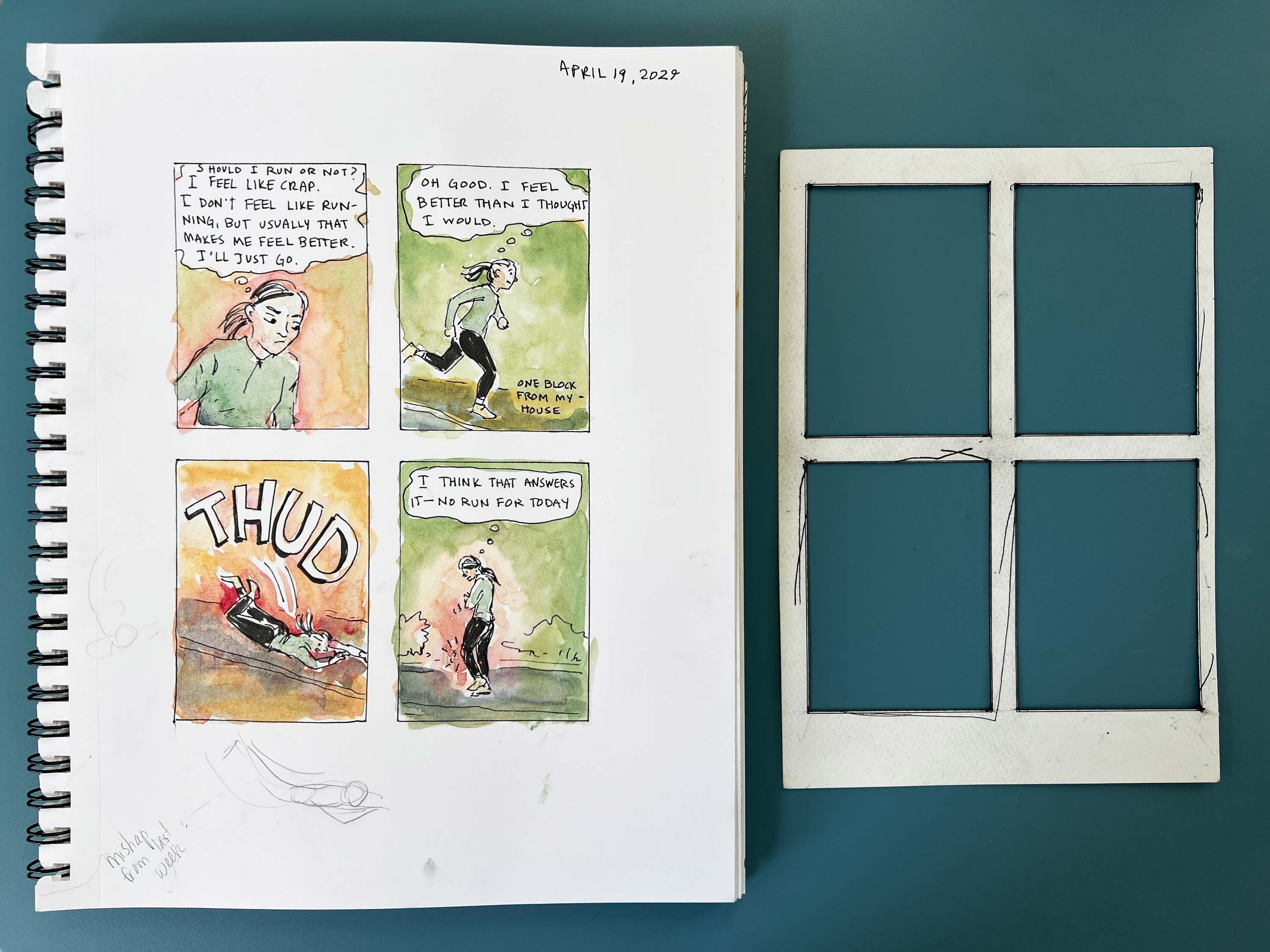
Feel free to use the template below — download it, resize it to fit your sketchbook, print it on heavier paper, and cut your own stencil with a ruler and X-Acto knife. Or you could simply trace over it.
My Process
Again, everyone’s brains work differently. Some people start creating comics by thinking of the images, others start with text, and others do them together. But here’s the way I often make mine:
Brainstorm possible ideas. Usually I brainstorm the topic of my diary comic while I’m brushing my teeth before getting ready for bed. But if you’re just getting started, try making a short list of possible things from your day you might want to make a comic about. I’d recommend keeping the topic simple at first so you don’t get overwhelmed and give up by trying to make a complicated story.
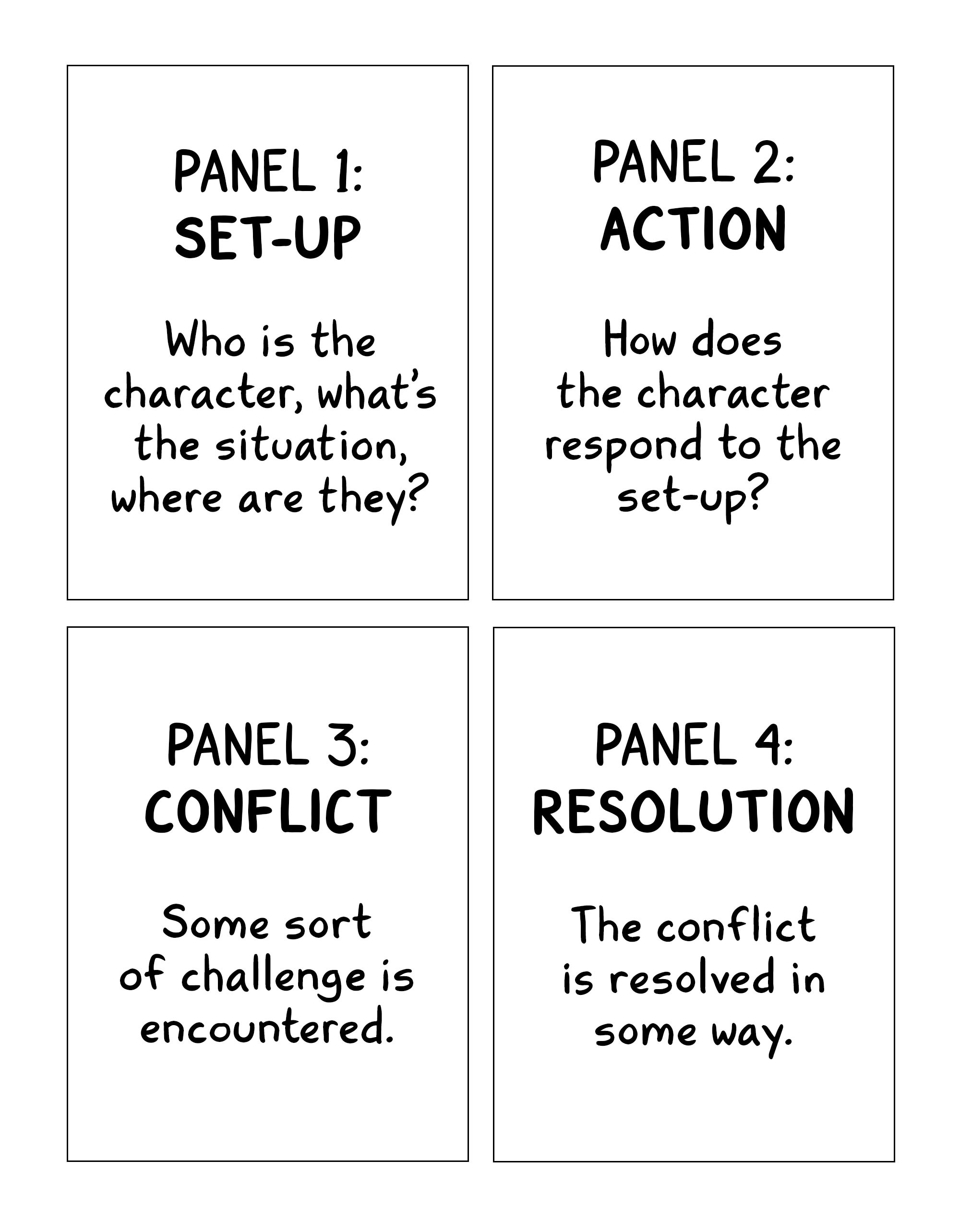
Plan what text and images you want to put in each panel. I often do this on a separate piece of paper since it’s usually pretty messy. This might be a quick thumbnail drawing or a numbered list of the text in each panel. If you're using four panels, here's one way to structure them:
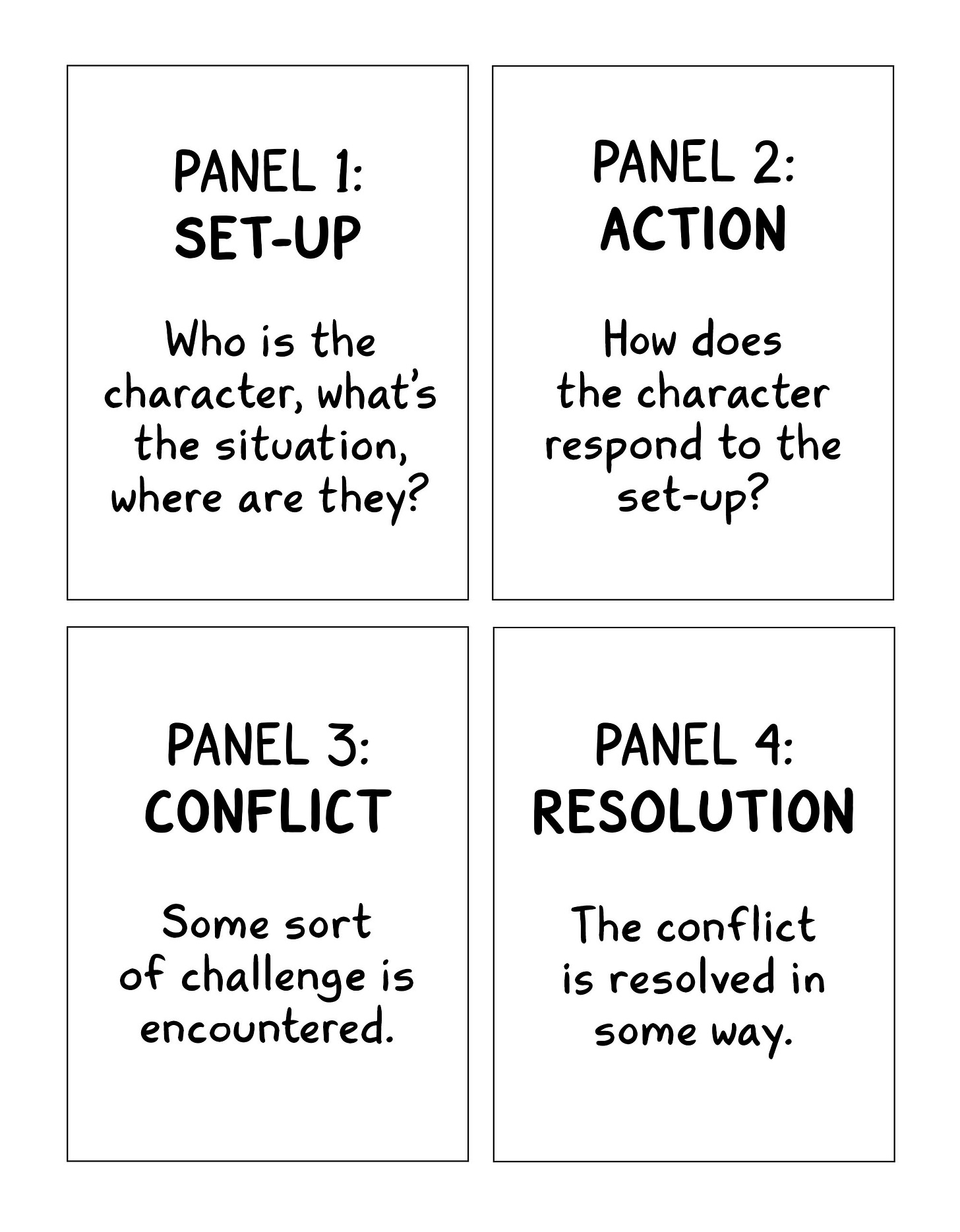
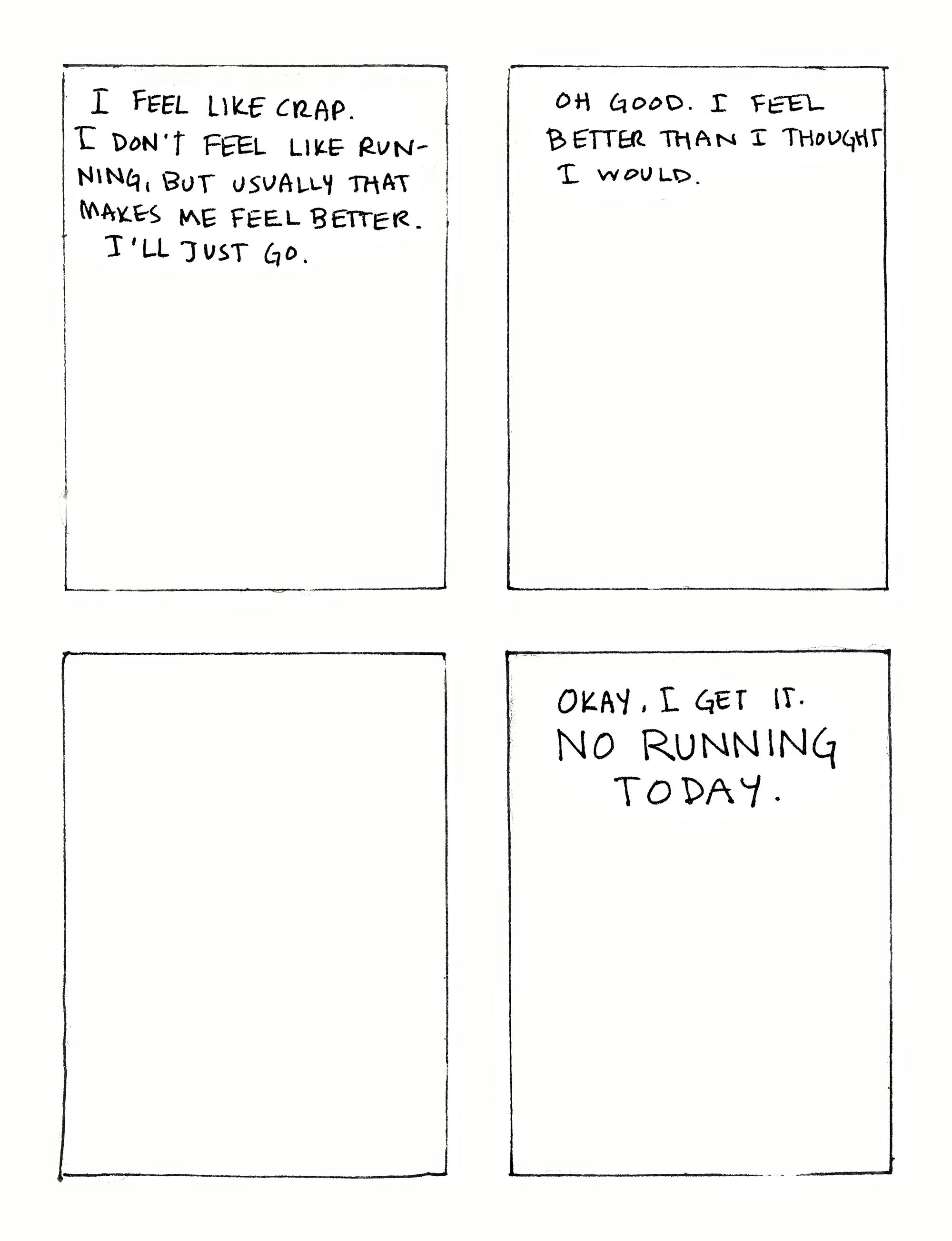
Write your text into the panels. I put text in the top quarter to a third of each panel, especially narration. If I'm unsure about text for a specific panel, I leave it blank (as I did below in Panel 3) and come back after I've drawn in the art.
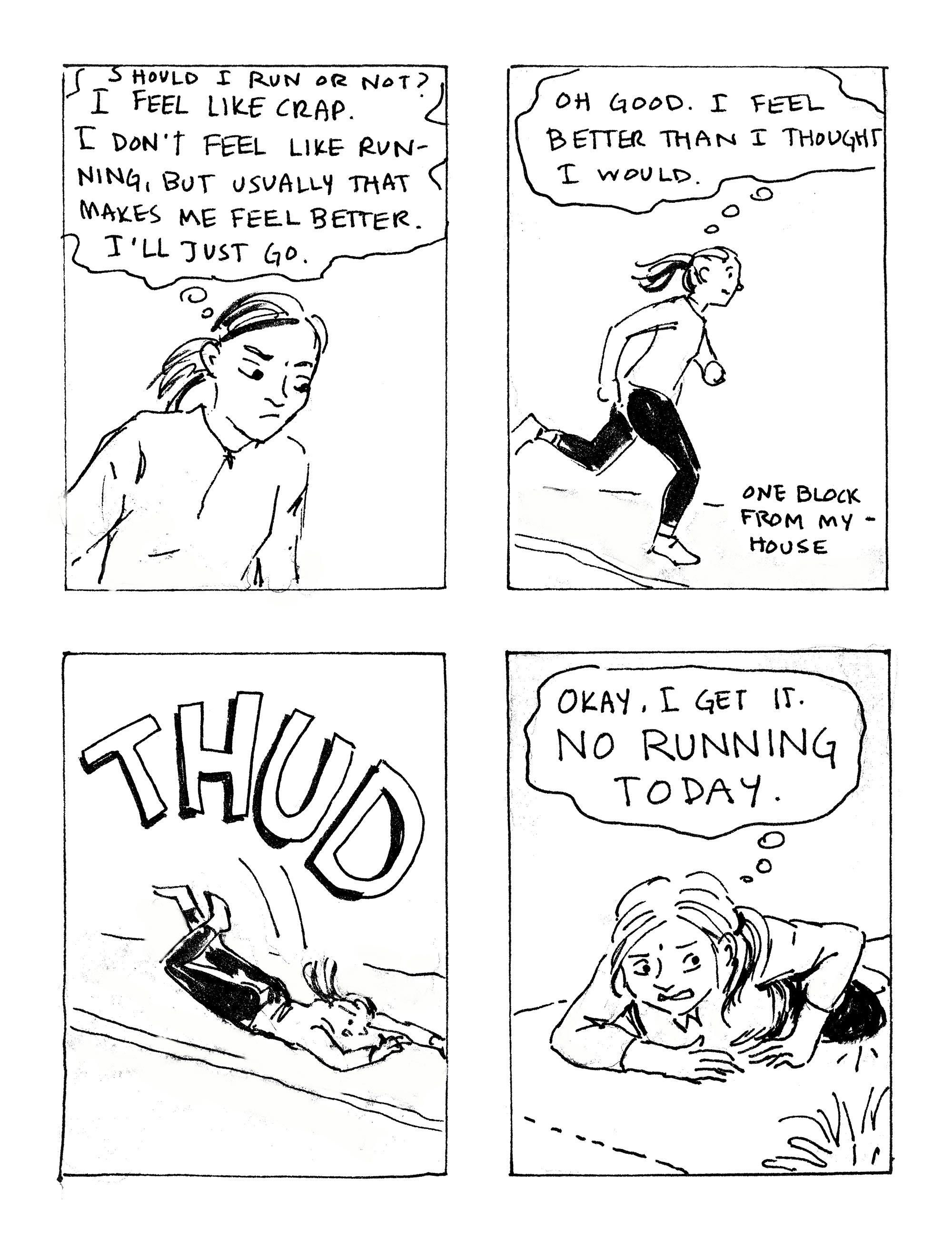
Draw your line art. I work in pen and usually skip pencil sketches underneath—when I pencil too carefully first, I’m less likely to finish. I sometimes use reference photos, but often don’t. Accuracy isn’t the goal for me since it’s more about capturing the specific moment and feeling.
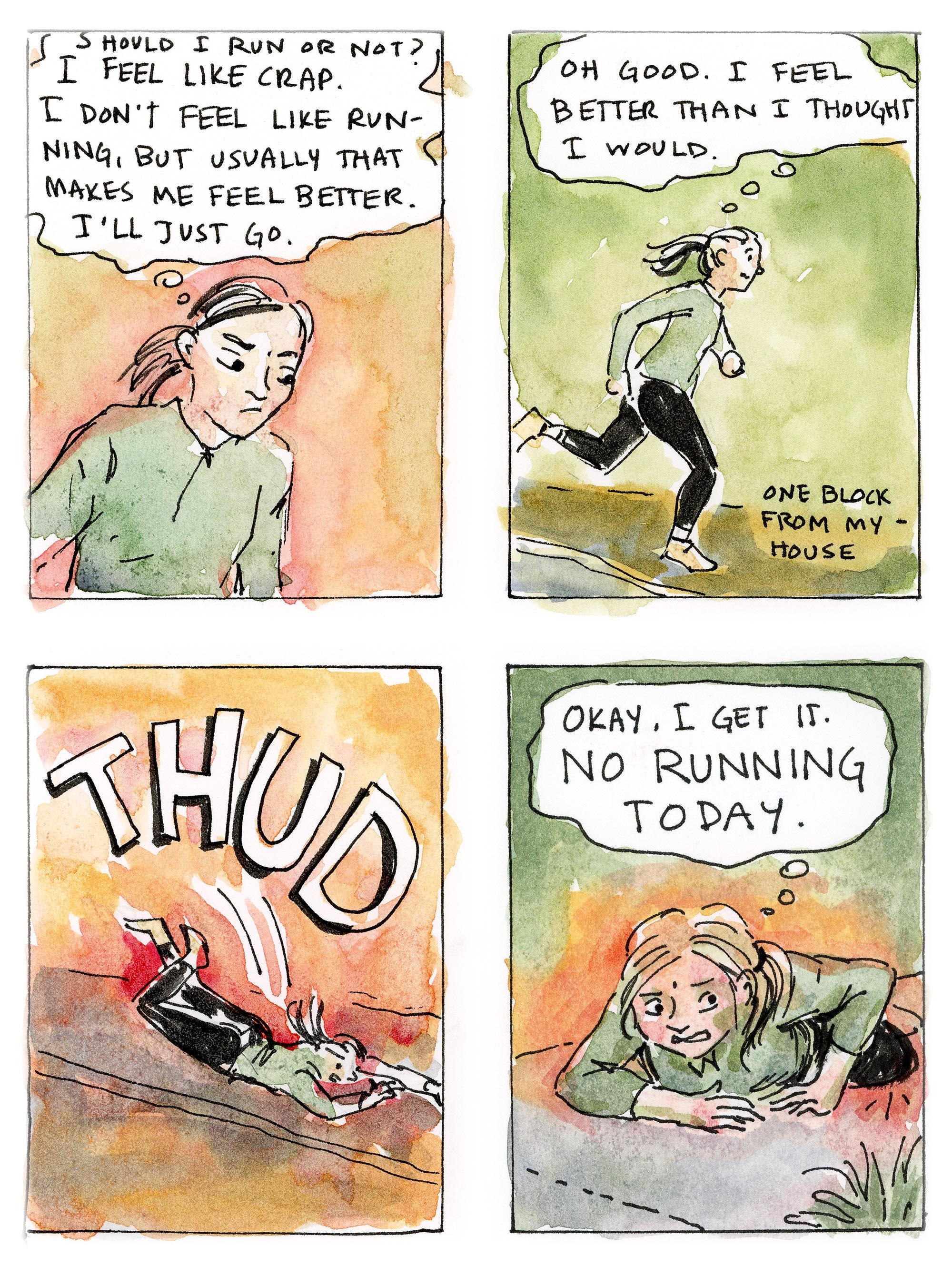
Add color (if you want). Since I make my diary comics in bed at night, I save watercoloring for the next day as a quick warm-up for my day ahead. If you’re new to coloring, I’d recommend starting using only one or two colors at first. And remember coloring doesn’t have to be realistic (the sky doesn’t have to be blue, the grass doesn’t have to be green).
Tools
Use whatever tools you like to draw with!
Personally, I’d recommend doing it with a pen and paper instead of working digitally since I find that working digitally encourages perfectionism since I can infinitely edit. Also, after a day working in front of the computer, drawing on my iPad or tablet is the last thing I want to do.
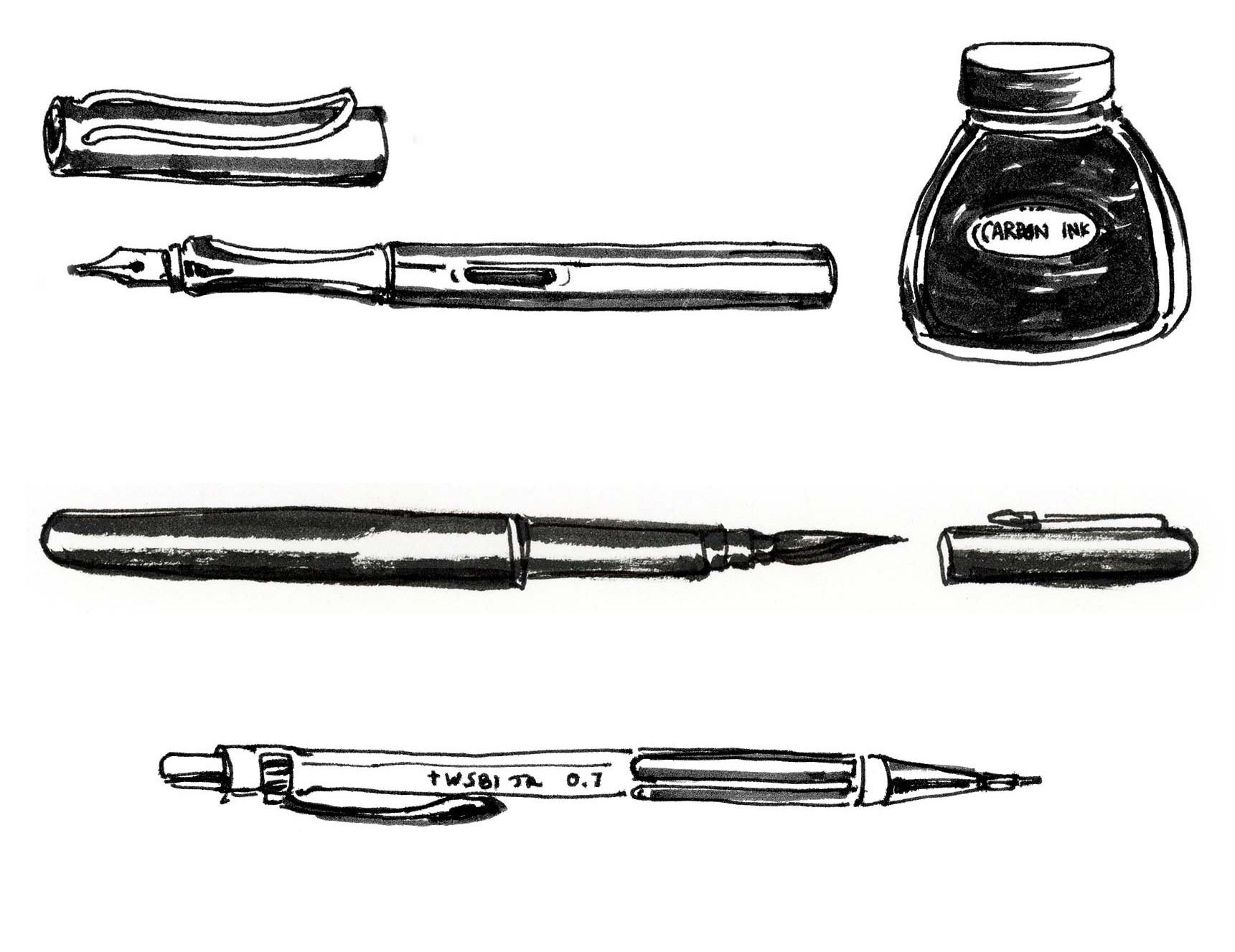
I also find a deeper connection with my emotions when I work directly on paper than when I work digitally, and since processing my emotions is a big part of my diary comics, this is important to me.
I’d suggest working in a sketchbook or with paper you are actually comfortable filling and experimenting with—not fancy paper where you’ll be too precious to ever actually create. In terms of specific recommendations, here’s a post I did a while ago on some of my favorite drawing tools.
When I Fit It In
I do mine before I go to bed and I find being near to sleep loosens something in me that’s good for creativity. I’ve also noticed that they help me sleep better. Artist and Substacker Zsofi Lang makes hers during her kid’s after-school activities, same time and place every week. I find it helpful to find a time that makes it a habit rather than a decision.
If you missed my post last week, I wrote about what diary comics are and why I love them.

If you want to explore working with me to accelerate and grow your comics or graphic novel work, here are a few ways I collaborate with creators:
One-on-One Coaching and Consulting: Learn more here
Bi-Weekly Mentoring Group Through Sequential Artists Workshop: Learn more here.
K’s Kettle: Something New
K’s Kettle is my monthly Zoom gathering for paid subscribers and this month we’re trying a new format. Instead of comic-making, we’re going to share where we are in our creative lives using a simple structure: rose, bud, thorn. What’s going well, what’s growing, what’s been hard. No feedback, just good company.
If you’ve been thinking about upgrading to a paid subscription, this is a nice reason to—it’s a warm, low-key hour and I’d love to see you there.
Join us: Tuesday, May 19 at 2pm CT / 3pm ET. Use the link in this post to register.

Leif Love
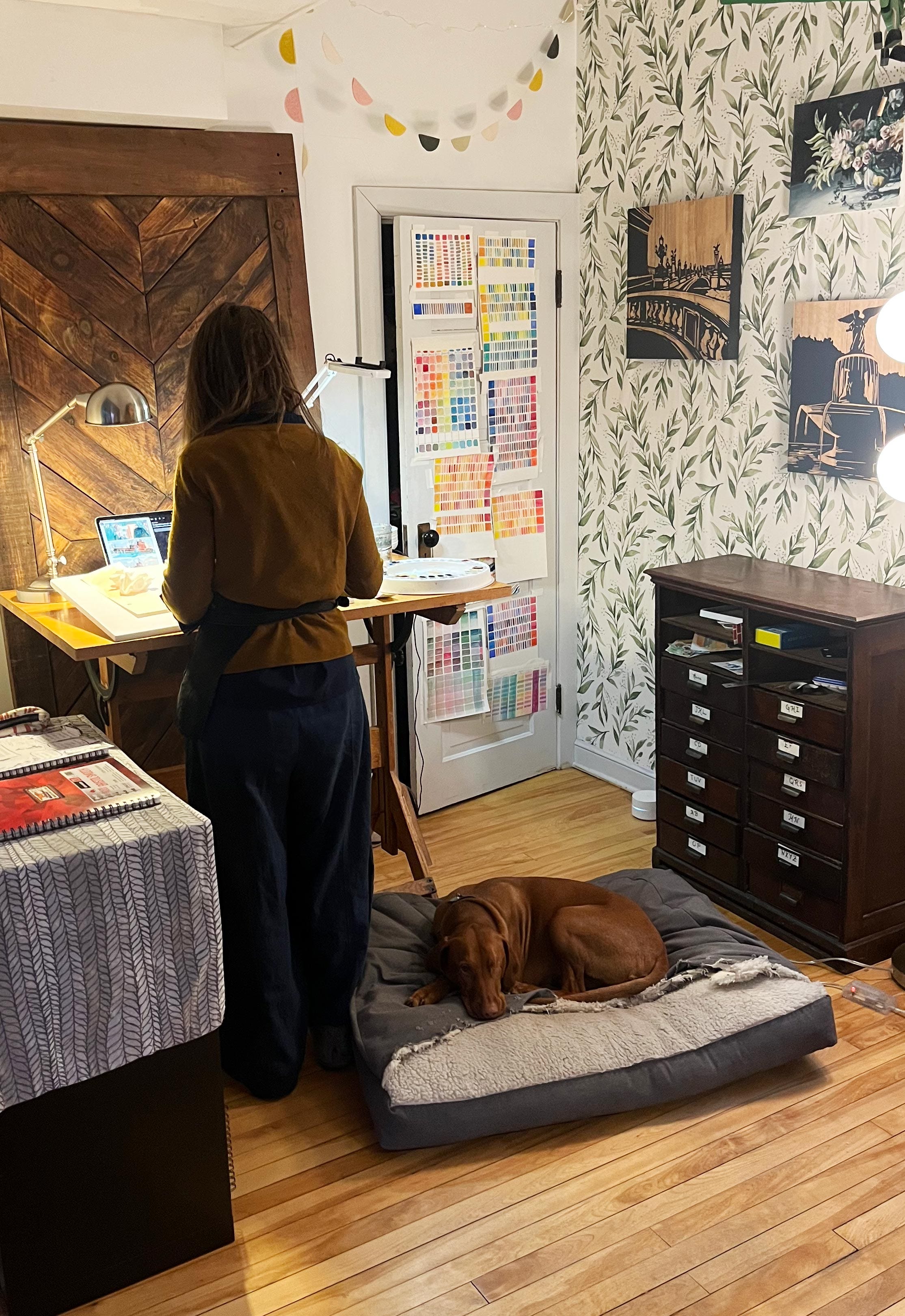
Leif’s a pretty great studio dog when he’s not trying to eat his bed or pieces of paper that fall to the ground.
Take care and keep creating!
-Katharine
This is awesome. I love how you break it all down and suggest a purpose/focus for each panel. And how you created a template to quickly create your panels.
Always love peeking into your process! 😁 While I mostly work in digital, I recently started some illustrated journaling (finally!) and totally agree that using pen directly on paper is a great way to go. Proportions off? Lines sloppy? Who cares! 😅 It's a much different--and really valuable--kind of practice. ✨